
Annual reports & financials.
The documents.
The 2024 STEAM program evaluation.
The purpose of this program evaluation is to assess the effectiveness and impact of the Black River Innovation Campus’ (BRIC) STEAM programming, which began in February 2024. The evaluation aims to provide valuable insights into how well the program is achieving its goals of increasing math and science scores within the Windsor County school district and neighbouring regions, as well as promoting participation in STEAM activities among underserved members of the community. The scope of the evaluation includes examining student outcomes, educator professional development, community impact, and the financial aspects of the program. By evaluating these components, the evaluation seeks to identify strengths and areas for improvement, ultimately guiding the program’s future development and ensuring its sustainability and relevance to the community’s needs.
- 288 community members reached in year one, at $293 per person — free to all participants.
- Campers rate return-interest 3.78/5 and recommend-to-a-friend 4.27/5.
- ~40 educators trained across VT & NH; measurement of classroom impact is the next step.
Student outcomes.
As the National Research Council (2011) notes, strong mathematical and scientific abilities are critical for developing technological and engineering skills.
there is a clear link between high performance in these subjects and better educational and career outcomes in STEM fields, which underscores the long-term benefits of tracking these metrics (Hossain & Robinson, 2012)
Secondly, math and science scores are typically measured using standardized tests, providing a consistent and objective framework to assess student performance across various schools and regions (U.S. Department of Education, 2016)
Robust math and science education contributes to a country’s economic growth and global competitiveness, as emphasized by the White House Office of Science and Technology Policy (2018)
By monitoring these scores, educators and policymakers can identify and address achievement gaps among different student groups, ensuring equitable access to quality STEM education (U.S. Department of Education, 2016).
Because our programming is generally used to augment existing curriculum and is not usually directly tied to testing, a direct measurement of test scores may not be possible. However, we can gauge students’ interest and confidence with the material through surveys and questionnaires. Studies show a significant correlation between students' math and science scores and their interest and comfort levels with the material. For instance, Wang (2002) found a moderate relationship between math and science achievements, suggesting proficiency in one subject positively impacts the other. Blotnicky et al. (2018) demonstrated that higher mathematics self-efficacy is associated with greater interest in STEM careers. Cerbito (2020) highlighted that positive attitudes, such as confidence and motivation, are linked to higher proficiency in mathematics. Lastly, Tapia and Marsh (2005) explored how students' conceptual understanding in math relates to their learning outcomes, including math test scores and academic self-efficacy. Collectively, these studies underscore the importance of math and science scores as indicators of students' interest and comfort levels, which can influence their future educational and career choices.
Skill development.
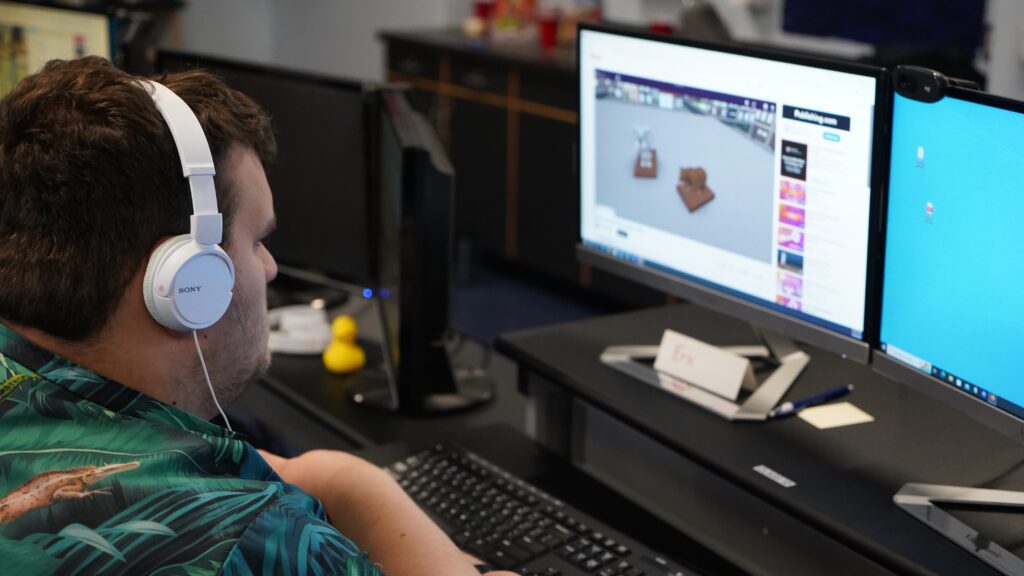
Our summer campers and workshop students who interfaced with technology tools, many of whom had not previously used a mouse or keyboard, demonstrated remarkable improvement in computer literacy by the end of their sessions. Our summer campers became proficient in navigating the CoSpaces environment using a mouse and keyboard, and designing 3D maps that were VR-ready. Collaborative projects were common, with students sharing their work and exploring new concepts like block coding together. This collaboration facilitated natural growth and the exchange of ideas, resulting in students creating rudimentary User Interfaces for their games, coding events, and even setting up primitive AI systems. Game theory and design concepts were easy for students to pick up as well, due to the nature of CoSpaces and the desire of students to make a product that was engaging and fun for the user.
Our workshop students routinely show immediate improvement in computer literacy skills, particularly when using CoSpaces, due to the high level of engagement from the students in the activity (it’s fun.) A desire to improve their projects most often results in an intrinsic interest in block coding, unlocking future potential learning opportunities for the students.
Our Summer Camp students focusing on airfoils iteratively designed and tested paper and wooden airplanes to maximize flight duration. By applying the scientific method, they learned how air moves over a wing to create lift. Similarly, our laser-cutting students enhanced their design skills and mastered the software tools necessary to assign cutting layers accurately.
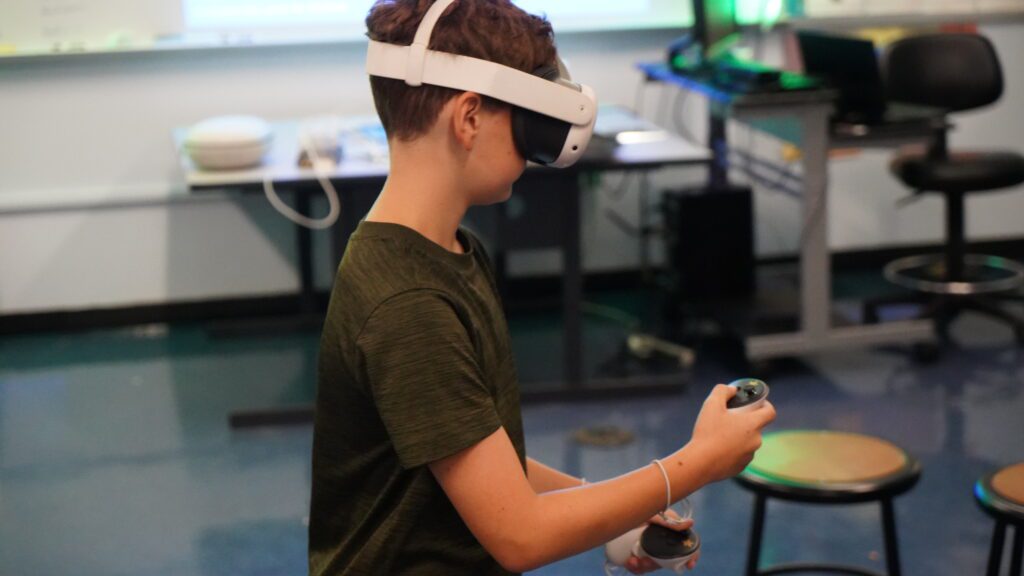
Robotics camps and Elementary LEGO Leagues provided students with foundational skills in computer usage, block coding, and mathematical concepts like measurement, angles, rotational speed, and torque. These experiences collectively contributed to the students' comprehensive skill development, equipping them with valuable STEAM competencies.
These skill improvements align with the Common Core State Standards (CCSS), Next Generation Science Standards (NGSS), as well as Technology and Engineering Standards (ITEEA) listed below.
Mathematics standards met.
Science & engineering standards.
Skill Development
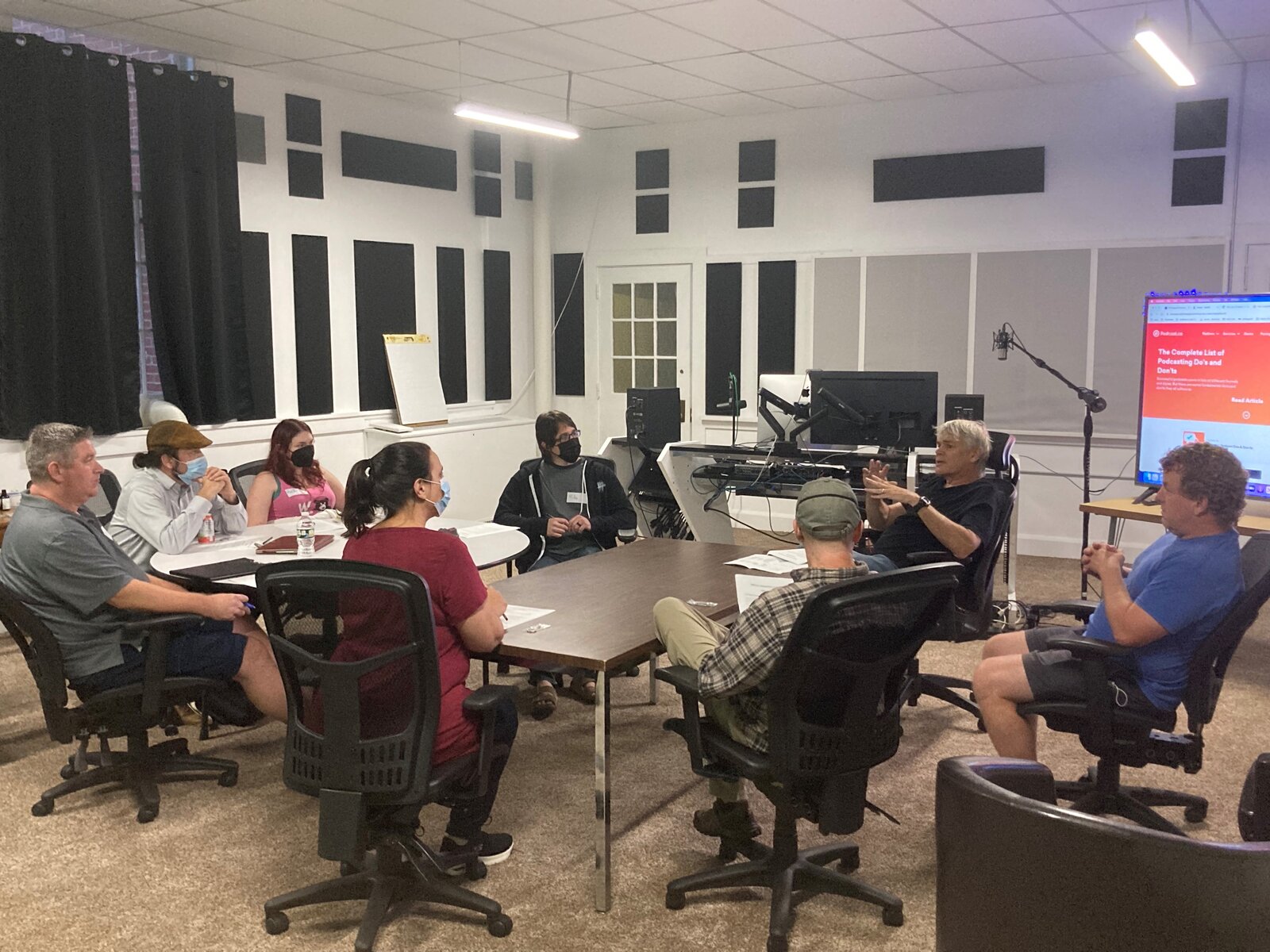
Professional development and community workshop opportunities from February 2024 until December 15th, 2024 impacted a total of around 40 educators across Vermont and New Hampshire, as well as around 10 community members. Topics covered were the development and use of AI tools and technology, CoSpaces, and LEGO Robotics. Skill growth centered around the computer science mindset, which incorporates problem-solving, analytical thinking, continuous learning, problem-oriented approaches, communication skills, time management, and quick learning.
While our CoSpaces workshops saw interest from educators participating in the professional development, curriculum implementation of the platform was minimal, with only 2 of 12 teachers continuing use of the platform after the initial training. However, the platform was used as a basis for a day-long workshop for 7th and 8th grade females (Girl Powered Event, sponsored by River Valley Tech Center in Springfield, Vermont) as a result of this training.
While our CoSpaces workshops saw interest from educators participating in the professional development, curriculum implementation of the platform was minimal, with only **2 of 12** teachers continuing use of the platform after the initial training. However, the platform was used as a basis for a day-long workshop for 7th and 8th grade females (Girl Powered Event, sponsored by River Valley Tech Center in Springfield, Vermont) as a result of this training. Teachers gained skills in computer literacy, learning to manipulate the mouse and camera, as well as movement and creation tools within CoSpaces. Examples of lessons and curriculum were provided as well, to show the potential of the platform. Basic block coding was also introduced, such as movement of an object from one place to another and rotating objects. There is a possibility of this platform becoming integrated into the curriculum in the future at Compass school as well. Workshops using CoSpaces should be at minimum an hour and a half, to provide educators with enough time to understand and begin to enjoy the platform.
BRIC hosted 1 workshop on AI Tools and Technology, which was well-received by the community. Attendees were most interested in AI tools and their use, as well as environmental impacts of high-compute-power AI systems, such as Large Language Models (ChatGPT).
What we still need to measure.
Program funding & cost.
Our programming has impacted a total of 288 community members (of all ages). In order to achieve greater accuracy for our programs cost-effectiveness, additional data will need to be gathered in the areas of test scores, interest in STEAM careers pre and post-programming, and overall subject matter interest pre and post-programming. Based on our current data, it costs BRIC $293 a person for our combined programming. Our funding sources for this years’ programming are from Mascoma Bank Foundation, Claremont Savings Bank Foundation, Dalio Philanthropies, Cosmos Fund LLC, and the Vermont Better Places Grant.
Our limited survey results seem to indicate, as reflected earlier in this program evaluation, a high interest in our programming overall by both youth and adults/educators, and a desire for the programming to continue and expand.
This $293 cost for BRIC programming (which is currently free for all participants) compares very favorably against other STEM-related programming available to students around Vermont. Our student capacity is somewhat limited by available teaching space and instructor availability, but averages at 12 students per session. Here is a list of five comparison programs and their costs per person:
Vermont State University Youth Camps:
Located in Randolph, Vermont, these camps offer hands-on experience in science, health, advanced manufacturing, and more. The cost is free for eligible Vermont residents (high school, 20 students per session).
Aloha Foundation Camps:
Situated in Fairlee, Vermont, these camps provide a variety of STEM-focused activities. 2025 tuition is $13,650 for the full session, $8,950 for a half session, and $5,950 for the 2-week session (capacity varies, focuses on low camper:counselor ratio).
Audubon Nature Camp:
Located in Huntington, Vermont, this nature-themed camp offers STEM activities integrated with environmental education. The cost is around $300 per week (scholarships available, 10-15 students per instructor).
iD Tech Camps at University of Vermont:
Held in Burlington, Vermont, these camps focus on coding, robotics, and other STEM skills. The cost starts at $899 per week, with options for day and overnight camps (small group or 1-on-1 learning).
The Governor's Institutes of Vermont (GIV)
offers a sliding scale tuition structure to ensure accessibility for all students, regardless of their financial background. The tuition ranges from $10 to $2,650 depending on family income (serves around 1,674 students, or 2% of all Vermont high school students, across all programming).
BRIC’s STEAM programming budget utilization can be broken down into a few categories:
Sustaining a grant-funded program.
BRIC’s STEAM programming is currently 100% grant-funded. The long-term viability of a 100% grant-funded STEAM program presents several challenges and opportunities. While grants can provide essential initial funding to launch and sustain programs, relying solely on grants can create financial instability due to the competitive and uncertain nature of grant awards (Henderson, 2018). To ensure sustainability, it is crucial for such programs to diversify their funding sources, including seeking partnerships with local businesses, securing sponsorships, and implementing fundraising initiatives (Markowitz, 2020). Building a robust network of supporters and demonstrating the program's impact through measurable outcomes can also attract more consistent funding streams (Smith & Roberts, 2021). Developing a strategic plan that includes financial sustainability measures can help mitigate the risks associated with grant dependency and ensure the program's long-term success and growth (Wilson & Goforth, 2019). BRIC is currently in the process of finding ways to reduce or eliminate our STEAM programming’s reliance on grants, and has a roadmap drafted towards that end, which includes creating paid workshops and professional development.
Works cited.
- Aloha Foundation Camps. (n.d.). Aloha Foundation Programs. Retrieved from Aloha Foundation
- Audubon Nature Camp. (n.d.). Audubon Nature Camp. Retrieved from Audubon Vermont
- Blotnicky, K. A., Franz-Odendaal, T., French, F., & Joy, P. (2018). A Study of the
- Correlation Between STEM Career Knowledge, Mathematics Self-Efficacy,
- Career Interests, and Career Activities.
- Cerbito, A. F. (2020). Comparative Analysis of Mathematics Proficiency and
- Attitudes Toward Mathematics of Senior High School Students.
- Governor's Institutes of Vermont. (n.d.). Tuition and Costs. Retrieved from GIV Website
- Gülhan, F. (2023). Parental Involvement in STEM Education: A Systematic Literature Review. European Journal of STEM Education, 8(1), 05.
- Harvard Gazette. (2021). Increasing access and opportunity in STEM crucial, say experts. Retrieved from Harvard Gazette
- Henderson, S. (2018). Grant Funding in STEM Education: Challenges and Opportunities. Journal of STEM Education, 19(2), 45-56.
- Hossain, M., & Robinson, M. G. (2012). How to Measure and Evaluate Impact of STEM Initiatives in Education. Journal of Science Education and Technology.
- iD Tech Camps at University of Vermont. (n.d.). Camps at University of Vermont. Retrieved from iD Tech
- Markowitz, D. (2020). Diversifying Funding Sources for Educational Programs. Education Finance Journal, 22(3), 78-90.
- Milner-Bolotin, M., & Marotto, C. C. F. (2018). Parental engagement in children’s STEM education. Part I: Meta-analysis of the literature. LUMAT:
- International Journal on Math, Science and Technology Education, 6(1), 41-59.
- Murcia, K., Pepper, C., & Williams, J. (2020). Youth STEM Career Choices: What’s Influencing Secondary Students’ Decision Making. Issues in
- Educational Research, 30(2), 593-611.
- National Research Council. (2011). Successful K-12 STEM Education: Identifying Effective Approaches in Science, Technology, Engineering, and
- Mathematics. National Academies Press.
- Punzalan, C. H. (2022). STEM Interests and Future Career Perspectives of Junior High School Students: A Gender Study. International Journal of
- Research in Education and Science, 8(1), 93-102.
- Shulga, T. I., Zaripova, Z. F., Sakhieva, R. G., Devyatkin, G. S., Chauzova, V. A., & Zhdanov, S. P. (2023). Learners’ career choices in STEM education: A review of empirical studies. EURASIA Journal of Mathematics, Science and Technology Education, 19(5), em2261.
- Smith, J., & Roberts, L. (2021). Measuring Impact in STEM Education Programs. International Journal of Education and Development, 31(1), 112-130.
- Tapia, M., & Marsh, H. W. (2005). How is the Conceptual Level of Students Associated with Learning Outcomes?
- The White House Office of Science and Technology Policy. (2018). Charting a Course for Success: America’s Strategy for STEM Education.
- U.S. Department of Education. (2016). STEM 2026: A Vision for Innovation in STEM Education.
- Vermont State University Youth Camps. (n.d.). Youth Camps. Retrieved from Vermont State University
- Wang, J. (2002). Relationship Between Mathematics and Science Achievement at the 8th Grade.
- Wilson, K., & Goforth, T. (2019). Strategies for Financial Sustainability in Education Programs. Educational Leadership Review, 28(4), 55-67.